Friday, June 12, 2009

Here Comes the Weekend!


If we had
a nickel for
every time
we heard the
words "TGIF"
the past few
months...
well, we
would be
filthy rich!
There is no denying times are tough out there. Listening to media news offers little consolation. There is an enormous increase in the number of people who are using Facebook and Blogs as a form of keeping connected with events in the lives of people we care about. A common theme we are seeing is a return to the ways our grandparents and great grandparents lived. Now if you ask me, this isn't all bad. Actually, it's pretty all good. Families are returning to the home garden, the home table gathered up with friends and family, and rediscovering the things that used to make life in the mid 20Th century quite heartwarming. Board games, classic books, picnics, and nature are having strong pulls on the American heart. With this in mind, there is no time like the present to bring back a family tradition of Sunday brunch. We recently made a mouth watering quiche that would be a perfect main course. Now don't panic- you're going to make the crust from scratch- and you won't believe how it will open up worlds of possibilities in your baking.
Start with a glass or metal bowl. You can use an old fashioned pastry mixer or your standard blender if you have a pastry attachment. If all else fails, you can do this even with a long tined fork! Take 1 1/4 cups flour and blend it with a 1/4 teaspoon of salt. Add to this 1/3 cup of shortening. Blend these together with your mixer or fork until the shortening resembles little peas in the flour. Add 1 tablespoon of cold water and lightly blend with a fork until the area is moist, doing this with 5 tablespoons total and moistening the entire mixture. Roll lightly into a ball and pat it somewhat flat onto a lightly floured board or counter top. Roll until the dough is about 12 inches in diameter. Don't worry if it is flaky and somewhat difficult to roll out. If possible roll the dough onto your roller and place it into a 9 inch round pie pan. Work the dough up the sides and use any overlap to fix bare areas at the rim. Line your dough with foil and bake at 450 degrees for 8 minutes. Remove the foil and bake for an additional 5 to 6 minutes until the crust is lightly browned. While the crust is baking you can prepare the filling. On a paper towel lined plate, place 6 slices uncooked bacon and about a half cup of diced onion. Lay another paper towel over the bacon and onion and place in a microwave for about 2 minutes. Check for tenderness in the onion and browning of the bacon. You can cook this for 1 more minute if the bacon appears not quite cooked. What you want is brown but not crisp- and most of the oils should catch in the toweling. Tear the bacon into small bits and set the mixture aside. In a glass bowl, lightly beat 8 eggs. Add to the eggs 1/2 cup of sour cream and 1/2 cup of milk. Season with 1/4 teaspoon of salt, 1/8 teaspoon of pepper, and 1/4 teaspoon of nutmeg. Lightly mix in about 2 to 3 cups cooked spinach. The organic frozen spinach packages work perfectly for this as long as it is thawed. At this point, if you have a mixer out, lightly froth this mixture because it helps to incorporate the eggs thoroughly into everything else. Finally, add 2/3 cup of cheese of your choice like a mozzarella or light cheddar and 1/2 cup shredded Swiss cheese. Blend carefully and pour this filling into your cooling crust. Bake at 325 degrees for 45 to 55 minutes until a knife inserted at center comes out clean. The quiche has the best texture if it can stand for about 10 to 15 minutes before serving. Use this time to dole out bowls of fresh fruit and cups of steaming hot coffee to accompany your quiche. Mouths will be watering from the aromas wafting from the oven and seconds are a sure thing. Count your blessings and know that you have served a breakfast that would make your grand parents proud!

Tuesday, June 9, 2009

The Tastebud Reader

There are
days in the
summertime
which are
so hot and
humid that
there is
nothing to
be done
except lay prostrate in a hammock with a good read.
Always a sucker for a beautiful cover photo and catchy title, Gary Paul Nabhan's Songbirds, Truffles, and Wolves: An American Naturalist in Italy practically leaps off of the shelf into one's hands. From the title alone a promise of Italian countryside, rare foods, and nature lures the reader into its pages. Gary Nabhan is an ethnobotanist who embarks on a journey from Florence to Assisi covering the footsteps of Saint Francis along a two hundred mile route. The story that emerges from Nabhan's thoughts and walk gives the reader much to ponder. One theme in the book is that of a food's Mother Country. Nabhan, because of his vocation, knows much more than the average person about the origins of foods and the food lines into other countries as the result of migration from place to place in human history. He is struck by the Old World and its assumption that certain foods have been there always. The world, for example, readily links tomatoes with Italians but it is a native of Peru. The fruit spent a few hundred years being cultivated and cooked to perfection in Europe, and even though it is a New World contribution, this fact has been largely forgotten. Nabhan takes us on a walk of change, change in the environment, change in food thought, and change within himself. His "stories within a story" stay with the reader for quite some time as he relates how United States immigrants take big risks to smuggle in seeds from their homeland, sometimes sewn within their hemlines. Nabhan tells of the dangers of eating unknown foods with trials of growing fava beans and the perils preparing corn maize when it first landed in Europe. As with many things that transfer from culture to culture, the Indian method of preparing maize did not accompany the seeds. The book allows a very personal entry into Nabhan's emotional and social make-up during his stay in Italy and it allows the reader to slip easily into his thoughts and movements along the trail. Don't be surprised if you find yourself having cravings for pasta and truffle oil or gazing at the Italian wine section a little longer than what was once your norm. This book teaches the reader to think about food in a whole new light.


Friday, June 5, 2009

Slow Food...Time to Hit the Brakes

We all know
what Fast Food
is...
but do you
know, or have
you forgotten,
about Slow Food?
Slow Food International is an organization
that wants us all to remember our heritage, at least where our food is concerned. Slow Food International came into being decades ago and their reason describes its very necessity best:

"to counteract fast food and fast life and the disappearance of local food traditions and people's dwindling interest in the food they eat, where it comes from, how it tastes, and how our food choices affect the rest of the world".

The organization strives to drive home three main points. The first is a given- your food should taste good. Food should be clean, meaning it should be produced in a manner that does not harm the environment, the welfare of the animal, nor our own health and health of others. Slow Food also believes in Fair. In most circles this is a tough word to find agreement on, but it is a basic belief that at all levels fair compensation should be paid for the work of producing the food. In a lot of countries, indigenous food producers are being forced out by the ability of trade to import less costly, and sometimes, less tasteful and/ or healthful food. Based on these principles, organic is good, but sustainable is even better.


Biodiversity in our food supply is just as important as biodiversity in other areas of science. Every day it is more and more imperative that we save traditional grains, vegetables, fruits, animal breeds, and food products. These traditional varieties are quickly disappearing because of the consumer's choice for convenience which translates into large scale agribusiness. We are saving more than variety- we are literally saving our heritage.

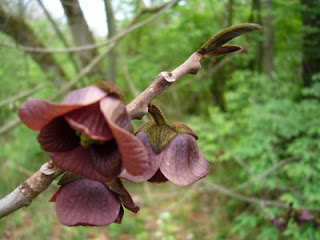
A case in point is the endangered American Paw paw pictured above in its fruit form and in flower. Does its taste come to mind when you see the written word? Probably not, because most Americans have never held one in their hands. Paw paws are our largest edible fruit and have a very tropical flavor tasting like a combination of banana, mango, and pineapple. There are hundreds of foods listed on the United States Ark List and any number of them will cure a case of food boredom. Slow Food means a reawakening and training of our senses. The common phrase "tastes like chicken" is a misnomer. Old rare breeds of chicken have a very distinct and wonderful taste like no other meat source.

A less hurried and less chaotic life begins at the table. Traveling to Italy a few years back really brought this idea home for us. Slow Food was apparent everywhere, from the open markets to the small bistros to the home table in a private setting. Tastebuds encourages everyone to learn more about Slow Food, and we think you will be surprised to find out who is taking on the challenge of bringing the concept into everyday reality. Virginia's Colonial Williamsburg and its Rare Breeds Program is just one place you'll see this in action. They have painstakingly gathered old rare breeds of cattle, pigs, sheep, and chickens and they are working to multiply these heritage animals by enticing other farms to include them in their flock. So next time the words "Tastes like chicken!" leave your lips, make sure you mean it tastes delicious!

Photograph of Paw paw fruit courtesy of USDA and flower courtesy of Jaime Robeck who is lucky enough to have one growing in the creek bed near her home.


Wednesday, June 3, 2009

An American Tradition


Like most American traditions,the one of Barbecue may have
originated somewhere else!
Barbecue has its earliest roots in "barbacoa", a Caribbean Taino word meaning sacred fire pit. Anyone who has had good barbecue would agree with this sentiment exactly. As with most great ideas, probably more than one clever human with a slab of tasty meat and a fire figured out the gist of BBQ. Australia and New Zealand have their "Barbie", South Africans their "Braai", Brazilians their "Churrasco", and Argentinians their "Asado". Most true connoisseurs of Barbecue will agree that the best tasting meat comes when cooking is accomplished indirectly over a sweet smelling hardwood at temperatures between 250 and 350 degrees Fahrenheit. Raising the topic of the correct method of Barbecue in the Southern United States may just get you a more heated conversation than one of both politics and religion put together. Things may go swimmingly in the conversation until the subject of sauce rises to the lips. Even the state of North Carolina cannot agree within its boundaries. The eastern portion of North Carolina prefers a vinegar based sauce, the center a mix of ketchup and vinegar, and the western portion a heavier ketchup base. South Carolina loves its barbecue any way they can get it, and they'll accept a mustard base sauce as well! Tennesseans agree with central North Carolinians in that they like a vinegar and ketchup base. Tennessee and Kentucky Barbecue may have a lot in common with those who ask for their sauce on the side, preferring to serve a dry rubbed and smoked meat separate from the sauce. The lucky person with that plate can dip their morsels daintily or throw their meat a life jacket! Alabama serves up a white sauce made from mayonnaise and vinegar that had its origins in the northern part of the state. We have that wondrous pulled pork sandwich because of Tennessee and North Carolina. We would be remiss if we didn't mention Maryland, who hot grills their meat and serves it rare with horseradish sauce, and Texas, who has four styles of their own Barbecue. Missouri gets in on American Barbecue in a big way with the hosting of "The World Series of Barbecue" each October. Interestingly enough, Florida is not one of the States often brought up in conversation when talking about Barbecue. We are, however, the closest state to the true origins of the custom in the Caribbean, which may explain why Florida is one of Barbecue's best kept secrets. Any Florida traveler worth their salt will tell you of secret Barbecue pits in every small town- only secret because most people do not know about them. One pretty popular place with the locals we know of serves their delicacy straight from a fire pit in the floor into a brown bag and straight out the door! Barbecue is something Tastebuds just loves doing. Never mind the heat of the smoker and the long watch that must be kept to be sure everything is progressing toward perfection- the smell of hickory and the promise of a perfect meal awaits us all.

Monday, June 1, 2009

We're Headed to the Fair!

Sometime
around
mid
September
we'll be
pointing
our BBQ
truck North
and headed
for the
Heartland.

Country Living Magazine is once again hosting its annual Country Living Fair in Columbus, Ohio from September 18 through 20, 2009. We wouldn't miss it for the world. This will be Tastebuds third consecutive year with the Fair, and though it promises to be a weekend of hard work for us, it delivers an authentic Midwest flavor full of charm for all who attend. The Fair is held at the historic Ohio Village which recreates an authentic 19Th century setting complete with wood boardwalks and an heirloom vegetable garden. The Fair takes over a rather large land parcel spreading unique artisans and their wares under tented booths. The first time Tastebuds rolled into town for the Fair, we certainly turned some heads with our banner proudly displaying our hometown of Naples. With over twenty thousand attendees that year, we sold out of food at the end of each day. We think they liked us. One thing is for certain, Midwesterners sure do smile a lot. Or maybe it was the freshly smoked pulled pork sandwiches, hot corn on the cob, and sweet tea we were serving up! So if you are making summer plans, why not come along with us this year? Just be sure to leave some room in your suitcase for all the fantastic finds you'll be bringing home!